
Manufacturing built around the harvest. Finished pasta at the end of it.
Gabanna is a Maker Station in Rotterdam. Farmers bring us a harvest, food brands bring us a brief, and both leave with something they can sell. BOONA, our bean and grain pasta, is made on the same line. It’s how hospital and care kitchens shift to plant protein without losing protein on the plate.
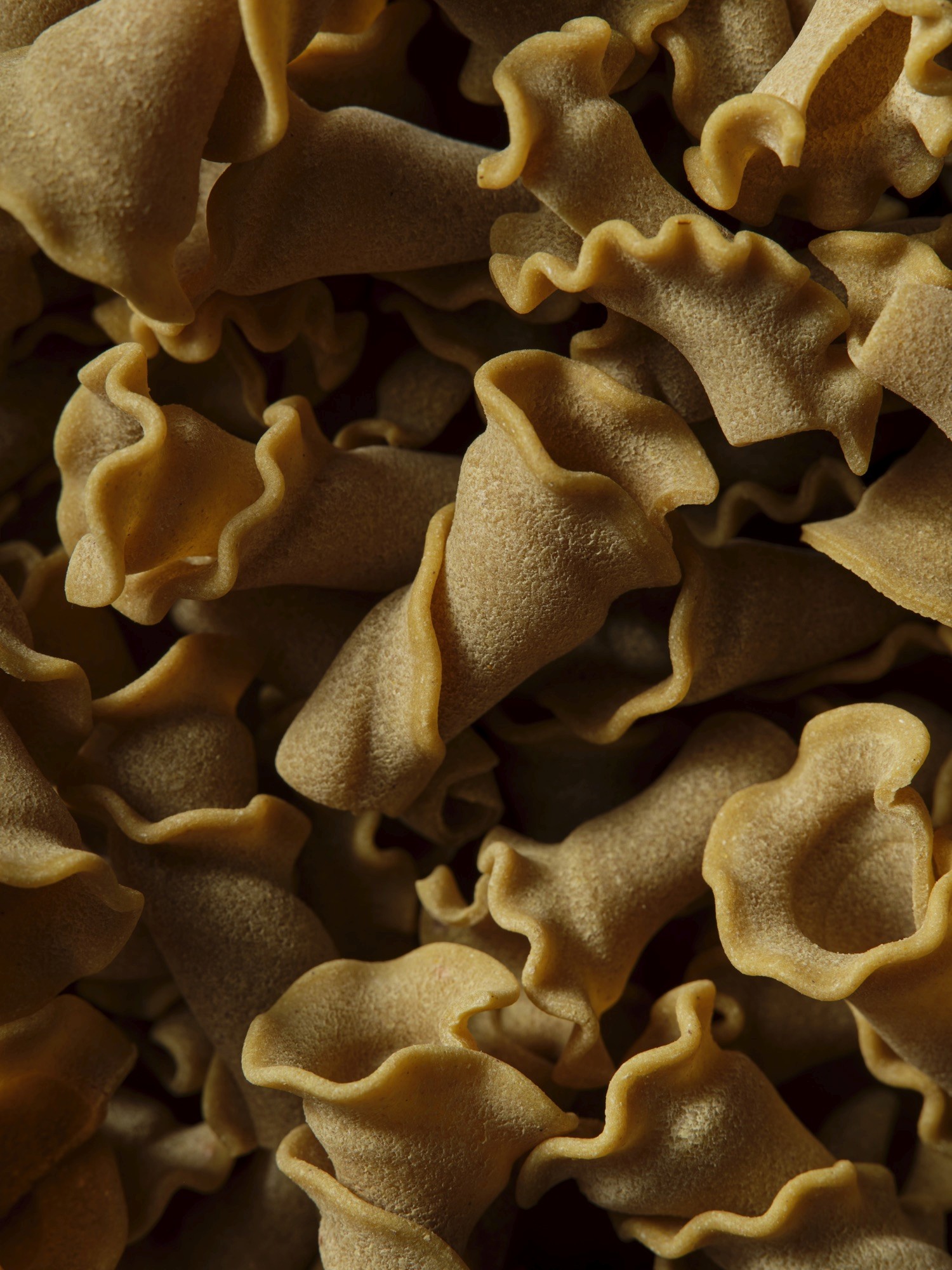


Bronze dies · Slow dried for 24 to 36 hours · Heritage grains · Dutch-grown beans · Creste di gallo, casarecce, gnocchetti sardi, ditalini rigati, conchigliette rigati · From 400 kg · Rotterdam
One line, three ways of using it.
Most pasta lines want one crop, one spec, and a run long enough to justify the changeover. Ours is built to change between runs, which is why these three can share it.

Manufacturing for farmers
Heritage grains, beans, and the part of a harvest that doesn’t make grade
A rotation with beans in it feeds the soil and gives you six or eight things to sell instead of one. It also gives you quantities nobody is set up to process. We built the line around that. A field of einkorn, a batch of borlotti, a run of veldbonen, and the produce too small or too odd for fresh sale all come back as pasta with a price on it.

Manufacturing for brands
Retailers, meal boxes and food brands
The interesting things a food brand wants to do usually die at minimum order quantity. A heritage grain no large line will touch. A shape that isn’t on a standard die. A blend that changes as the season changes. We build it with you, cut it to your spec, and produce it in quantities that let you test a season rather than commit to a year. What comes out of development is yours.

BOONA
Hospitals and care kitchens
Our answer to the protein transition on a care plate. Dutch beans milled with heritage grain, in shapes hospital and care kitchens already cook. High in protein and fibre, and it holds its shape through blast chilling and regeneration. Made on the same line, by the same people, and in service at a number of Zuid-Holland hospitals and care facilities.

R&D Corner
Future products, for us or other brands
Sandwich bread and shortbread biscuits. Pastina from vegetables that didn’t sell. A stir-fry plant protein, a balsamic vinegar alternative, and a fruit cereal. None of it is on sale yet. Some of it is working towards launch, and some of it will go to other brands and companies to take forward. It’s here because it shows what the line can be asked to do, and because more than one of our products started as somebody else’s question.
What lets the line change.
Four things, and they’re the same four whether we’re running a grower’s einkorn or a batch of BOONA.

A single field is enough to start.
From 400 kg you can take a harvest through development, into a first production run, and onto a shelf. One season, one answer, and no year of stock to shift if the answer is no.
Small runs aren’t a limit we work around. They’re the reason the line was built this way, and the reason a crop that would otherwise go for feed can become a product instead.
Ekomenu
Wilder Land
Lekker Lupine
De Biesterhof
Boerderij De Buytenhof
The blend belongs to you
Getting a heritage grain through an extruder is real development, not contract packing. We do it with you, and what comes out is yours to keep.
Scheduled around your harvest
Once a blend is proven, repeat runs follow your season rather than our calendar. Lead time 4 weeks.
A view within the week, at no cost
Tell us what you’re growing or what you want to make. We’ll come back on whether it’s possible, how it’ll behave, and roughly what it costs per unit.
Come and taste something.
All three start the same way. A short call, then a sample in the post. We’ll come back within two working days.


A Maker Station in Rotterdam, making pasta from regenerative harvests.
Contact
Maasboulevard 100
3063 NS Rotterdam
The Netherlands
© 2026 Gabanna FoodWorks, a brand of Green Banana Food B.V. · Privacy · Terms · Accessibility