

Nature grew the ingredients. The work is in how they go together.
No single crop does everything well. Grain brings structure and not much protein. Beans bring protein and no structure. We don’t fix that by refining one crop until it behaves. We put crops together so each one only has to do the thing it’s best at.

What a field already gives you
A rotation that’s good for the soil produces variety by design. Heritage wheat, spelt, emmer, einkorn. Veldbonen, lupin, chickpeas. Each one evolved to be good at something and none of them evolved to be good at everything.
Most food manufacturing treats that variety as a supply problem and engineers it away, taking one crop and refining it until it can do every job. We take the opposite view. The variety is the raw material, and the skill is in reading what each part is for.


Alone, no crop is enough. Together, they’re better than either.
Every blend we build starts with the same question. What is each ingredient here to do?
Structure comes from heritage grain. Gluten gives a shape something to hold on to, which is why pure legume pasta softens in the pan and blended pasta doesn’t.
Protein and fibre come from beans. Fava, lupin, chickpea, grown here.
Cohesion comes from psyllium husk, which binds a dough that would otherwise crack coming out of the die.
Flavour comes from the grain again, the nutty and mineral notes of spelt and emmer that a single refined flour has had taken out of it.
A fuller amino acid profile comes from the combination itself. Grains are low in lysine and beans supply it. Beans are low in methionine and grains supply it.
Change the ratio and you change all five. That’s the work, and it’s different for every crop and every shape.
The slowest part of the process is the most important one.
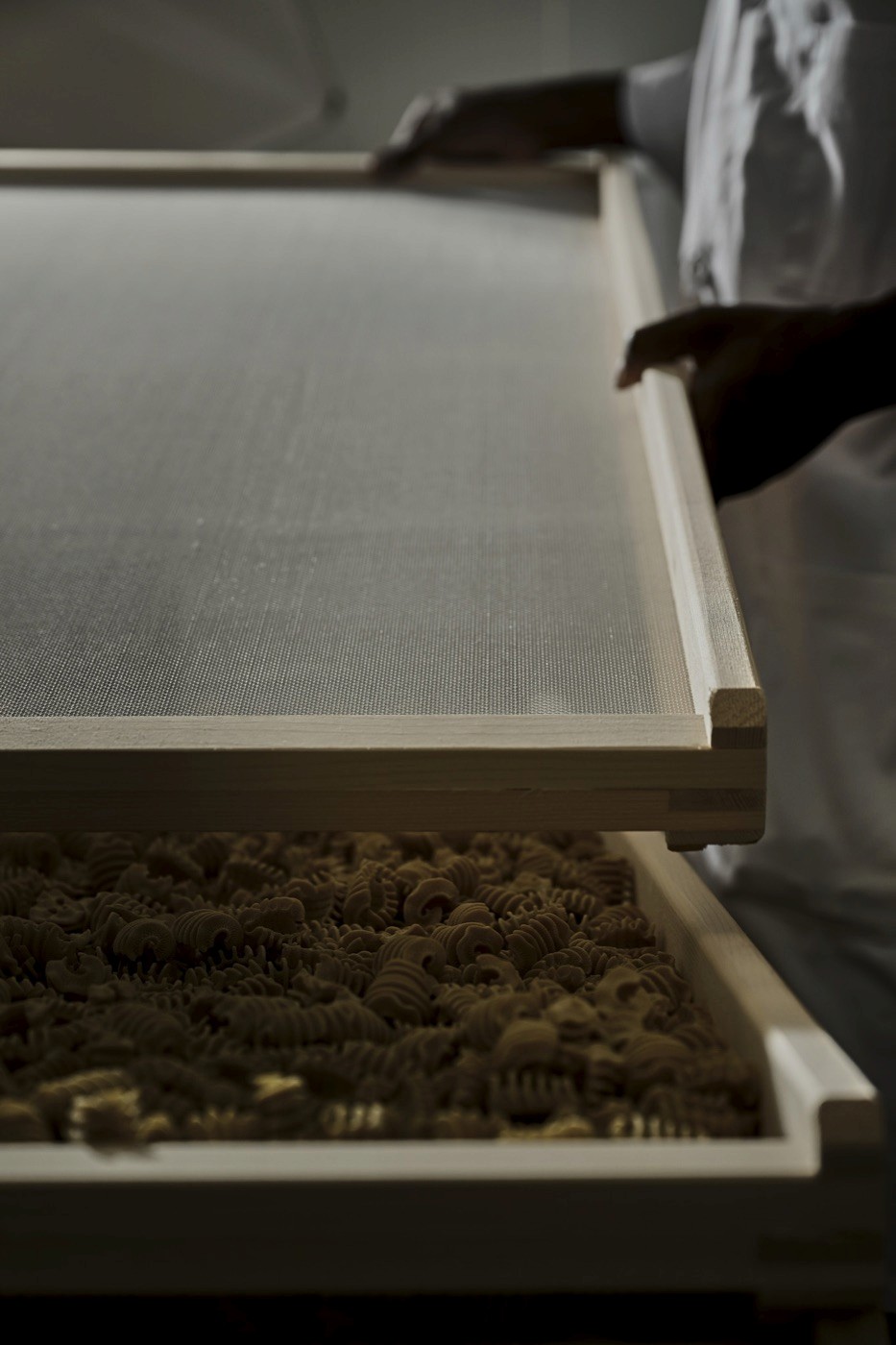
Twenty four to thirty six hours in the drying room at low temperature. A hot dryer would do it in a fraction of that and produce something that cooks fast, tastes of nothing and falls apart when a hospital kitchen regenerates it.
Time does things you can’t add. It sets the structure of the starch, it holds the flavour that heat drives off, and it’s the reason our pasta survives a cook-chill cycle.
The same principle runs through everything we’re testing. Sprouting takes days. Fermentation takes days. Both change an ingredient by waiting rather than by dosing it with something.
Whole ingredients
We work with flour, not with isolates.
Grain and beans are milled whole and blended. No protein concentrates, no texturisers, no emulsifiers, no colours. Psyllium husk is the only functional ingredient we use and it’s a milled seed husk.
That isn’t a position we took for the label. It’s what the blending method makes possible. If you get structure, cohesion and flavour by combining crops, you don’t need an additive to supply them.
R&D Corner
None of this is on sale yet. Some of it is in commercial trials and working towards launch, some is still an early concept, and some will go to other brands and companies to take forward. It’s here because it shows what the line can be asked to do.

Bread and biscuits
Taste testing
Sandwich bread and shortbread biscuits, made from our own blends.

Pastina from surplus vegetables
Chef ready
Vegetables that didn’t sell, freshly processed into a fine puree and blended with our grain mix into small soup shapes.

Stir-fry plant protein
Trials
A plant protein for stir-fries, made with sprouted beans and grains. Sprouting is there for texture and taste.

Fermentation
Concept development
Lactic fermentation to create flavour condiments, including an alternative to balsamic vinegar.
Fruit cereal
Trials
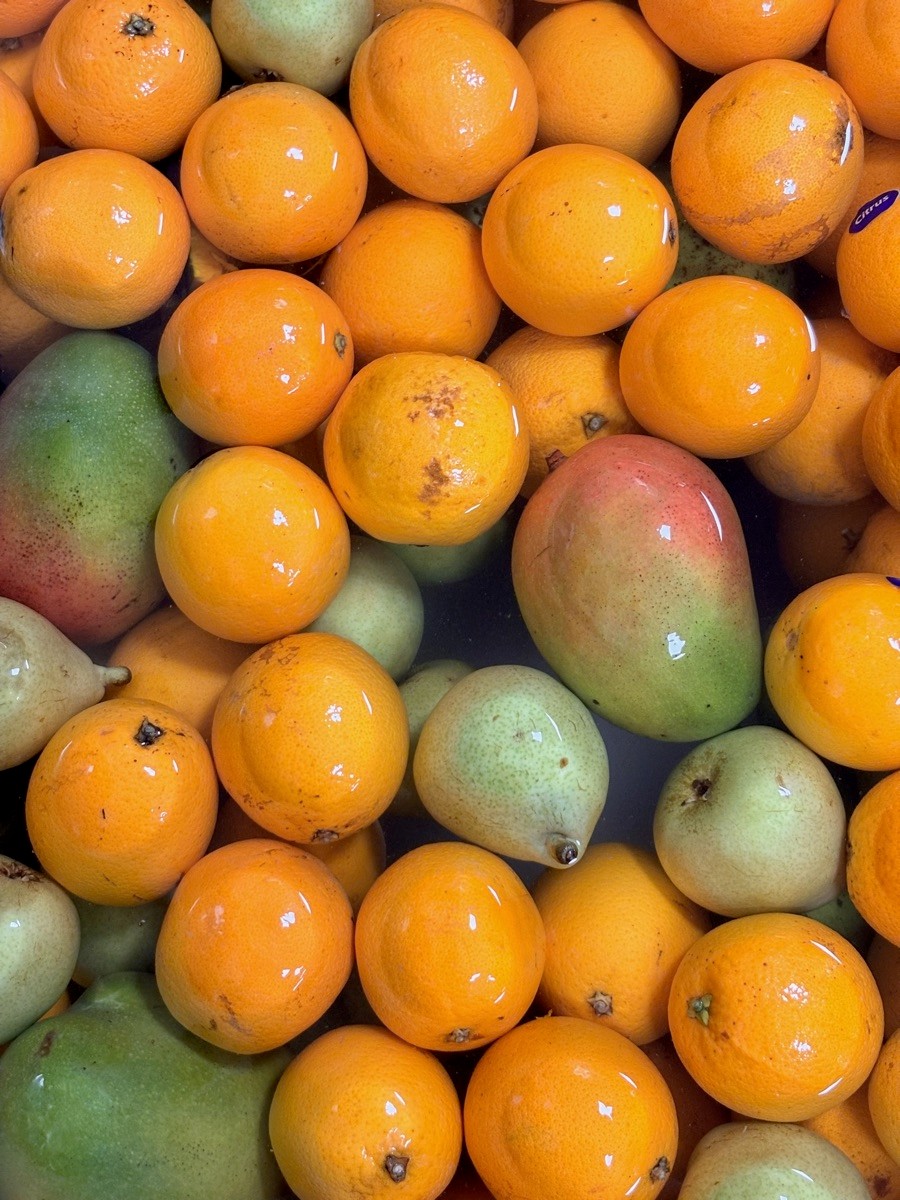
Real fruit, oats and sorghum, extruded into a flavour-rich breakfast cereal for the hot cereal category.
If one of these is close to something you need, say so. Several started as a question from someone else.
How a project runs
01
Brief and feasibility
Tell us what you’ve grown or what you want to make. We come back within the week on whether it can be done, how it’ll behave and roughly what it costs per unit. No charge.
02
Development
Blend, shape and trials until the texture, the cook time and the flavour hold. Two to three weeks and three to four rounds of samples for something new.
03
First run
From 400 kg, finished, packed and documented.
04
Repeat runs
Scheduled around your season rather than our calendar.
Shapes
Creste di gallo, casarecce, gnocchetti sardi, ditalini rigati, conchigliette rigati
Minimum run
400 kg
Typical lead time
3 to 4 weeks
Dies
Bronze
Drying
Slow air dried, 24 to 36 hours, low temperature
Inputs
Heritage grains, Dutch-grown beans and legumes, psyllium husk
Packing
Bulk, in 8 to 10 kg food-grade bags, boxed
Labelling
Batch and shape labels, on Gabanna boxes
Certification
HACCP, Non-GMO. FSSC 22000 in progress.
The pasta inside the box is unbranded, so you can repack it under your own brand or sell it loose in packaging-free shops.
Right now the line makes dry goods. If you need something it doesn’t do yet, ask anyway. We’re early enough that the answer changes as equipment goes in, and more than one thing we now make started as a request we couldn’t take.
Bring us something difficult.
The interesting briefs are the ones nobody else would take. A short call costs nothing.

A Maker Station in Rotterdam, making pasta from regenerative harvests.
Contact
Maasboulevard 100
3063 NS Rotterdam
The Netherlands
© 2026 Gabanna FoodWorks, a brand of Green Banana Food B.V. · Privacy · Terms · Accessibility